Showing posts with label school improvement. Show all posts

H.L. Mencken: A Voice for Our Times

By // No comments:

H. L. Mencken
H.L Mencken
Lately, I have been rereading the writings of Henry Louis Mencken (1880-1956) and continue to find him as complex and infuriating as I did when I taught him in my American/Canadian Literature classes. We could do with his wit and wisdom today.


Mencken was a major American voice of the 20‘s as an newspaperman, man of letters, social philosopher, and arts critic. Teachers might know his annoying quip: “Those who can, do; those who can’t, teach.” 
Make no mistake: Mencken was full of contradictions, with disturbing episodes of misanthropy, anti-semitism, and racism. But biographer, Dr. Fred C. Hobson,  demonstrates that he clearly redeemed these postures in his life and writings. You might want to download his writings (in the public domain) at Project Gutenberg for some challenging summer reading.
The Wikipedia article on Mencken is useful and lists of his quotations and aphorism are readily available. 
Mencken on Education
His work yields perennial insights on education that challenge current clichés about teaching and learning. Significantly, Mencken never separated good learning from deep living. He took an iconoclastic view of schooling as something too often  compromised by social conformity and second-rate thinking . Here are some of my favorite Mencken quotations:
The best teacher is not the one who knows most but the one who is most capable of reducing knowledge to that simple compound of the obvious and wonderful. 
The plain fact is that education is itself a form of propaganda - a deliberate scheme to outfit the pupil, not with the capacity to weigh ideas, but with a simple appetite for gulping ideas ready-made. The aim is to make 'good' citizens, which is to say, docile and uninquisitive citizens.  
School days, I believe, are the unhappiest in the whole span of human existence. They are full of dull, unintelligible tasks, new and unpleasant ordinances, brutal violations of common sense and common decency. It doesn't take a reasonably bright boy long to discover that most of what is rammed into him is nonsense, and that no one really cares very much whether he learns it or not. 
The average man does not want to be free. He simply wants to be safe. 
To die for an idea; it is unquestionably noble. But how much nobler it would be if men died for ideas that were true! 
The average man never really thinks from end to end of his life. The mental activity of such people is only a mouthing of clichés. What they mistake for thought is simply a repetition of what they have heard. My guess is that well over 80 percent of the human race goes through life without having a single original thought. 
When somebody says it’s not about the money, it’s about the money. 
It is impossible to imagine Goethe or Beethoven being good at billiards or golf. 
Genius: the ability to prolong one's childhood. 
I believe in only one thing: liberty; but I do not believe in liberty enough to want to force it upon anyone.
A Mencken Checklist
From such writings, I have created a checklist of the qualities which might be touchstones of enlightened teaching, learning, and living:
  1. clarity
  2. wonder
  3. skepticism
  4. tolerance
  5. doubt
  6. inquiry
  7. excitement
  8. pleasure
  9. common sense
  10. decency
  11. truth
  12. liberty
  13. enlightenment
  14. originality
  15. diversity
Last Thoughts
As the summer unfolds, we will watch with concern the Syrian crisis, the American election, the European debt, the London Olympics, and world leaders' neglect of the environment. Here are two last Mencken quotations that might offer perspective on the months ahead:
All human progress, even in morals, has been the work of men who have doubted the current moral values, not of men who have whooped them up and tried to enforce them. The truly civilized man is always skeptical and tolerant.   
An enchanted life has many moments when the heart is overwhelmed with beauty and the imagination is electrified by some haunting quality in the world or by a spirit or voice speaking from deep within a thing, a place, or a person.  
This bi-weekly blog appears usually on a Monday. 
All content is for free and public use. As the author, Tim Gauntley retains full intellectual property rights to the content.
Pageviews all time history as of 12:30 am on June 26, 2012 is 37,136

The Modern Syllabus: A Cautionary Verse

By // No comments:

SUMMARY
The author offers a satiric verse about the growing utilitarianism in education.

In his novel Hard Times, Charles Dickens satirizes a utilitarian approach to education, an approach that seems to be gaining ground again. His schoolmaster, Mr Gradgrind, is not evil so much as single-minded and has become synonymous with those who seek only the facts.

Recently, I've noticed another educational trend that disturbs me: governmental misuse of the argument for high standards by maximizing control over the way teachers teach the curriculum and minimizing their ability to create and share  resources. Put this together with other issues and it's a wonder I sleep at night.

I am coping by writing satire. Share it if you like it.

The Modern Syllabus
Ten Rules from A Senior Education Official
The best way to ensure reform
In education? Here’s the norm:
Stop our kids from being fools
And simply teacher-proof our schools.
To implement the Newest Learning
It does no good to be discerning.
No teacher needs to over reach,
For students learn what teachers teach. 
We need a modern syllabus;
New back-to-basics and no fuss.
I’ve taken time to write it out.
Ten simple rules to leave no doubt:
1. Seek high achievement for each one, 
    At lowest cost to everyone.
2. Underfund all but the Core. 
    Who needs music anymore? 
3. Shout equal opportunity, 
    But never let the kids run free.
4. Don’t let teachers (it’s so dumb)
    Write their own curriculum.
5. Apply the standards — no hesitation.
    (No standards without standardization).
6. Stick to facts and raise the scores. 
    Assess, assess, assess some more.
7. Keep teaching methods, resources too, 
   Down to a controllable few.
   
8.Use technology when you’re able, 
   But bolt it firmly to a table.
9. Keep subjects separate. Be ever wary
    Of those who are interdisciplinary. 

10. Make sure librarians are passé; 
    They’re far less dangerous that way.
So as you start on your profession
Go forwards to a new regression.
I got where I am today
Because I found the simpler way.
It all comes down to this in essence:
Spoon feed schools to indolence. 
No doubt, no mess, no obfuscation.
For basic, modern education!

Education Hot Topics: A Twitter Snapshot

By // No comments:
SUMMARY
A snapshot of key education topics is taken from the author's followers and plotted on a mind map. Interesting relationships and trends emerge.


What Are We All Talking About

Do you ever wonder where the music lies in all the noise? I wanted to know which topics educators were currently talking about. So I went to my burgeoning Twitter timeline on a specific, random day and time (Dec 8, 2011 at 4:07 pm). I then listed the ideas being discussed by my 'followed' colleagues which include teachers and teacher-librarians in the field, as well as notables like Joyce Valenza, Doug Johnson, Buffy Hamilton, Daniel Pink, Alfie Kohn, and Stephen Abram.

The conversation illustrated everything Twitter can be: inspiring or silly, banal or  significant, timely or fleeting. But I needed to do more to make sense of the disparate tweets.

A Mind Map of the Conversation

At this year's Ontario Library Association SuperConference in Toronto, my colleague Scott McPhee and I will be presenting Integrating the Learning Commons. So in preparation for our talk, I have used the Mac App Store's application MindNode (Free) to work my Twitter list into a mind map.

The result was illuminating. The key topics (nodes) that emerged were the following in alphabetical order:

  • Assessment
  • Creativity
  • Educational Reform
  • Information Trends
  • Internet for Learning
  • Learning Design
  • Literacies
  • New Technologies
  • Online Education
  • Resourceful Schools
  • School Libraries
  • Social Networking

The Value of Mind Mapping

For me, the best part of mind mapping is forcing yourself to organize random information into useful knowledge. The map is organic, growing the relationships among the ideas. Each branch can be further cultivated by more reflection. Whole branches can also be related to another to see what was included or missing. I highly recommend MindNode (Free) as a simple tool for teaching and learning. MindNode Pro ($19.99 is even more powerful.

Distinguished from brainstorming, mind mapping requires summarizing, analysis, organization and synthesis. It also checks a tendency to over-emphasize one area of practice over another. For instance, the dedicated teacher may focus on her subject and forget the big picture. Likewise, the busy administrator may be reading up on assessment and national school reform, only to miss the global conversation about new educational technologies.

While my snapshot is of a particular moment in time from a limited source, I hope you find my exercise helpful.

New Years Resolutions for Teachers: Looking Back to Look Forward

By // No comments:

SUMMARY: News Years prompts a look back and forward to the making of teacher resolutions. The author safely gives a list of his own, with some useful websites to use in the classroom and profession.
Tim's 36 Years of Resolutions
timgauntley.blogspot.com
Something Old, Something New
As New Years approached this year (now last year!), I recalled an old teacher habit I had: making resolutions. So I updated my blog format as promised and hope you like the new look and functionality, especially Blogspot's Dynamic Views that allow the reader to customize viewing.
Then I considered the making of this year's resolutions. Each December 31st, like many of you, I would draw up my annual list of ways to improve my teaching. As winter waxed, my focus would wane. Before I knew it, the next year had rolled around and the all-too familiar list would have to be made again.
Searching for perfection seemed counterproductive. Better to have lived the moment. In fact, that would always be one of my yearly resolutions!
Retrospective Resolutions
This year, now that I am consulting and not school teaching, I can afford the luxury of looking back, without censure or accountability. So I have recalled all those lists, winnowed them down, generalized them to protect myself and others, and pretended that my resolutions are already resolved! 
Resolutions for 2012 Thirty-Six Years in the Making
  1. Become a great storyteller and collector of stories. Everyone has a story to tell, even you.
  2. Plan your work and work your plan. As my father used to say of his military days: “Good reconnaissance was seldom wasted.”
  3. Do what you need to survive but go beyond. When teaching is merely about getting through the day, maybe it’s time to call it a day.
  4. Collaborate to root your labour in your profession. You stand on the shoulders of giants, and arm-in-arm with colleagues.
  5. Don’t just forgive your mistakes. Get others to help you laugh at them.
  6. Model lifelong learning in front of your student charges. Recharge them with your energy for deep feelings, conversation, and ideas.
  7. Every day memorize a poem, research a word, collect an anecdote, write a letter. Your synapses will thank you.
  8. Meditate, don’t medicate. Loving kindness may be a teacher’s best gift.
  9. Balance output with input. Your own learning (e.g., reading, viewing, traveling, listening) should equal your giving (marking, presenting, meeting, talking).
  10. Live more in the moment. It is all here, NOW, so you don’t need to make new resolutions every year!
Happy New Year
Useful Websites About Making Resolutions
Lively activities and teacher tips to help students plan and achieve their potential.
Making resolutions with children that not only affect them, but also those around them, locally and globally.
Inspirational piece on making resolutions by starting small.
Time to “throw away the education blueprint”?
Five concise resolutions “to get your year started right.”
Wise words from Jon Orech.

Beauty is Truth, Truth Beauty

By // No comments:
Tracing of the Soibos Vase
by John Keats
SUMMARY: The importance of fostering beauty in teaching practices, places, and resources is explored. The relationship of beauty to motivating students to learn and probe the truth of things is developed.


'Beauty is truth, truth beauty,—that is all  
Ye know on earth, and all ye need to know.'

What has John Keats' poem, Ode on  a Grecian Urn, to do with education, let alone with what is, for many, the first day back to school? Bear with me!

Beauty on Holiday

During the past school year, this blog has concentrated on several themes: the importance of creative and critical thinking, resources to support strong curriculum design, the new roles for educative technologies, and lately, the development of the learning commons, especially in and through the school library. However, one day on our recent English holiday, I was reminded that all the beauty I was seeing in art, architecture, hedgerow, and friends, was at the heart of how I was learning about them.

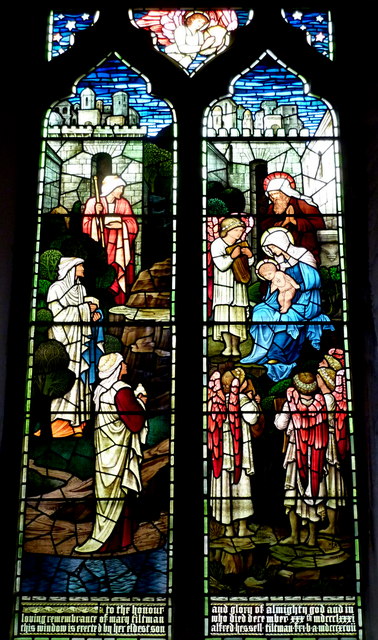
I am not an expert in aesthetics but I know that when I am faced by the beautiful in nature or human creation, my senses transport me beyond my limitations to new thoughts and feelings. Beauty is the great teacher. The colour and composition of a stained glass window in St. Mary's Church in Rye or the timeless ritual of a cricket match on the village green produce both a satisfaction to the soul and a challenge to the mind to learn more about one's world.

Burne-Jones Window in
St Mary's Church, Rye, East Sussex
Beauty and Teaching

Based probably on the writings of his friend Benjamin Haydon and visits to the Elgin Marbles, John Keats penned his famous poem to suggest the extraordinary moral power of art. His poem pictures the story told by the urn, in its freezing of time in space, as an eternal reminder that beauty and truth are inexplicably joined in the human imagination.

However, as school begins, I do not imagine that many teachers or students are thinking such things! Yet,  teaching is a way of finding beauty in all of its guises -- the symmetry of mathematics, the balance of athletics, the dynamics of the cell, and the sense-made-sound of a poem. Much of what drew us to teach our specific subject was a passion for the beauty of it! Share your passion through the sense of beauty that drives it.

It is all too easy as we share course outlines, talk of assessments, plan field trips, and take attendance to forget that our students are yearning for more. Often our classrooms are bare and tawdry, our schools overwrought with leaflets and messages, and our assignments utilitarian. Thanks to all of you who take special time to make your learning spaces beautiful. Congratulations to all of you who reach for the spirit in your lessons and projects. Truth in its many forms will more easily flourish there.

In all our thinking, designing, technologizing, and socializing, let us not forget that creating beautiful places and experiences for our students will more likely motivate them to find the truth they seek.

NEXT WEEK: More from www.lcommons.org.

School Improvement? Ask the Kids

By // No comments:
Most jurisdictions around the world engage in some form of continuous assessment of schools. OFSTED in the United Kingdom, with its rigorous inspection and target setting, is a government body that is firmly established and has its defenders and detractors. The Fraser Institute in Canada is an example of how a third party can take it upon itself to rate school performance. Using such data as provincial assessments and graduation rates, the Institute tracks improvement and ranks schools within specific geographic areas. Again, some see this as a contribution to encouraging schools towards excellence; others see it as a false measure that only affects real estate prices.
Very few schools systematically ask their clients to assess their performance. Students, you might argue, are too impressionable or immature to engage in high-level evaluation of complex systems such as school organization or curriculum delivery. However suspect you may think the source, data is data. Used judiciously, student surveys can provide valuable feedback to a school staff, particularly if three criterion are followed: first, the students must understand the instrument used for their feedback; secondly, results must be interpreted to yield general trends, thereby minimizing specific contradictions; lastly, results should provide opportunities for further dialogue, clarification, and action.
The school library can be an excellent place to coordinate such data gathering. In a previous school, my library staff took the lead in providing our new and courageous principal the survey data he needed to move other staff in effective directions. I had never seen a enterprise that could affect school culture so quickly.

So, in this spirit, I have created the above secondary school student assessment form, based on the very instrument (the Achievement Chart) used here in Ontario to measure student performance in developing required knowledge and skills. It grids the same four categories (Knowledge and Understanding, Thinking, Communication, and Application) to a four level value scale. 
Perhaps you think this is bogus, believing that assessment of school and student are two different things and the ability to assess by student and teacher quantitatively so. Perhaps you can reshape the statements in each category or even the categories themselves. What would an elementary assessment instrument look like? How could you use technology to develop this process?
Whatever your instrument, the principle is the same: if the purpose of assessment is to improve student learning, then students should be given regular opportunities to comment on how well they are being taught, how deeply they are learning, and how creatively their school could improve.

Labels